




















 Journalist खबरीलाल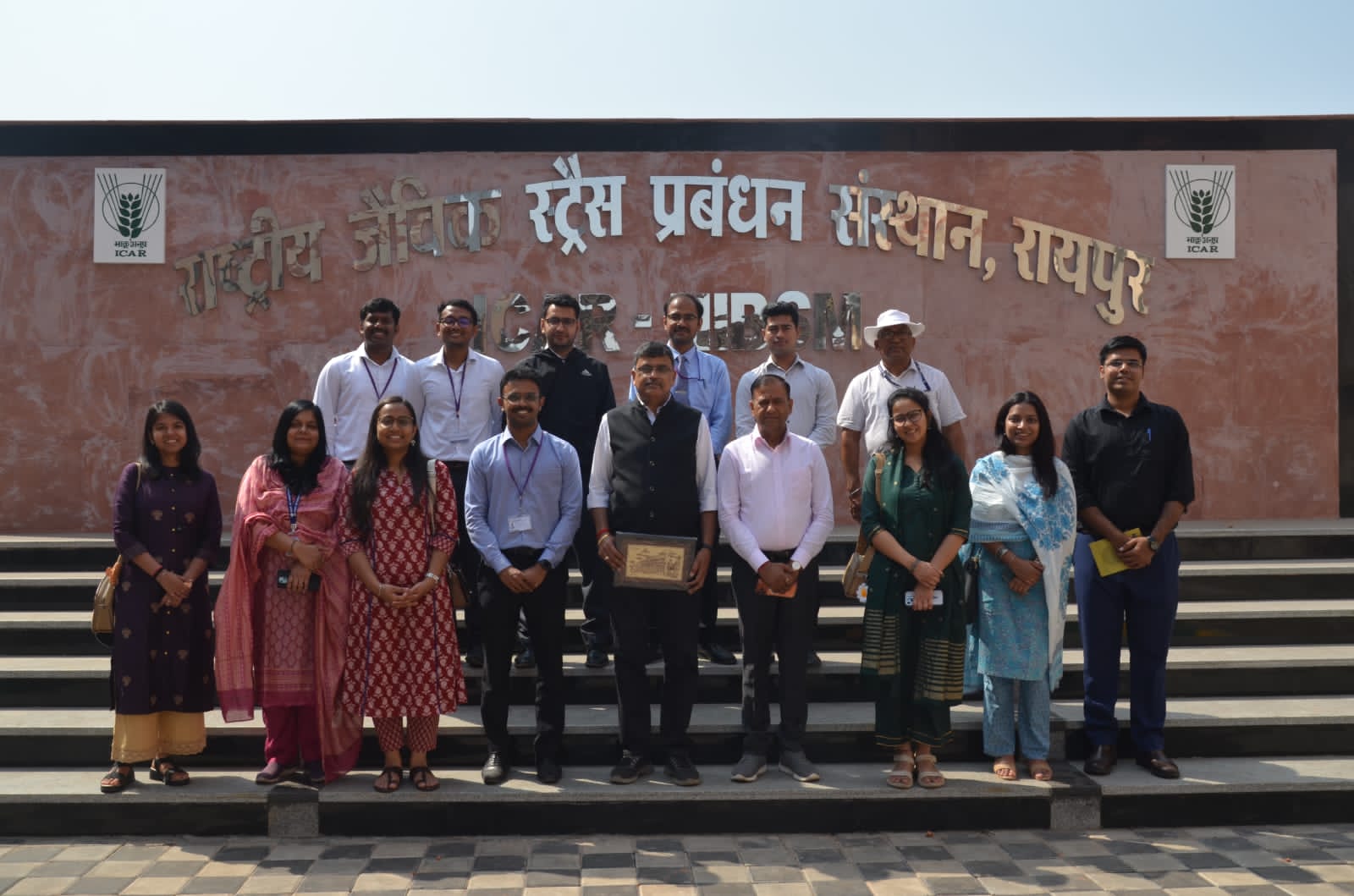






Trainee officers of the 2024 batch of the Indian Administrative Service (IAS) visited the ICAR–National Institute of Biotic Stress Management (ICAR–NIBSM), Raipur, as part of an academic exposure programme aimed at familiarising them with scientific research and institutional mechanisms for managing biotic stresses in agriculture.
During the visit, Director of the institute, Dr. P. K. Rai, interacted with the trainee officers and presented an overview of the institute’s vision, mission, mandate and functioning. He explained the significant role played by the institute in addressing biotic stresses that affect crop plants, which remain among the major challenges confronting modern agriculture.
Dr. Rai highlighted the institute’s ongoing and future research programmes focused on developing sustainable and science-based solutions for managing pests, diseases and other biological stresses that cause substantial yield losses in crops. He emphasised that the institute is actively engaged in research, education and extension activities aimed at supporting farmers and strengthening the agricultural sector.
Dr. Pankaj Sharma, Joint Director of the institute, briefed the trainees about the state-of-the-art research facilities available for scientists, faculty members and students. These include the Chemical Ecology Laboratory, Tissue Culture Laboratory, Analytical Laboratory, Open Top Chamber facility, Genome Editing Laboratory, Molecular Biology Laboratory, Glasshouse and Plant Growth Chambers.
The trainee officers also visited various laboratories and interacted with scientists to gain first-hand knowledge of the research being undertaken at the institute. They expressed keen interest and appreciation for the advanced scientific infrastructure and cutting-edge research activities carried out at ICAR–NIBSM.
The exposure visit provided the Indian Administrative Service trainees valuable insights into the role of scientific institutions in addressing emerging agricultural challenges and promoting sustainable crop production. The programme was coordinated by Dr. Pankaj Sharma, Joint Director of the institute.
Trainee officers of the 2024 batch of the Indian Administrative Service (IAS) visited the ICAR–National Institute of Biotic Stress Management (ICAR–NIBSM), Raipur, as part of an academic exposure programme aimed at familiarising them with scientific research and institutional mechanisms for managing biotic stresses in agriculture.
During the visit, Director of the institute, Dr. P. K. Rai, interacted with the trainee officers and presented an overview of the institute’s vision, mission, mandate and functioning. He explained the significant role played by the institute in addressing biotic stresses that affect crop plants, which remain among the major challenges confronting modern agriculture.
Dr. Rai highlighted the institute’s ongoing and future research programmes focused on developing sustainable and science-based solutions for managing pests, diseases and other biological stresses that cause substantial yield losses in crops. He emphasised that the institute is actively engaged in research, education and extension activities aimed at supporting farmers and strengthening the agricultural sector.
Dr. Pankaj Sharma, Joint Director of the institute, briefed the trainees about the state-of-the-art research facilities available for scientists, faculty members and students. These include the Chemical Ecology Laboratory, Tissue Culture Laboratory, Analytical Laboratory, Open Top Chamber facility, Genome Editing Laboratory, Molecular Biology Laboratory, Glasshouse and Plant Growth Chambers.
The trainee officers also visited various laboratories and interacted with scientists to gain first-hand knowledge of the research being undertaken at the institute. They expressed keen interest and appreciation for the advanced scientific infrastructure and cutting-edge research activities carried out at ICAR–NIBSM.
The exposure visit provided the Indian Administrative Service trainees valuable insights into the role of scientific institutions in addressing emerging agricultural challenges and promoting sustainable crop production. The programme was coordinated by Dr. Pankaj Sharma, Joint Director of the institute.